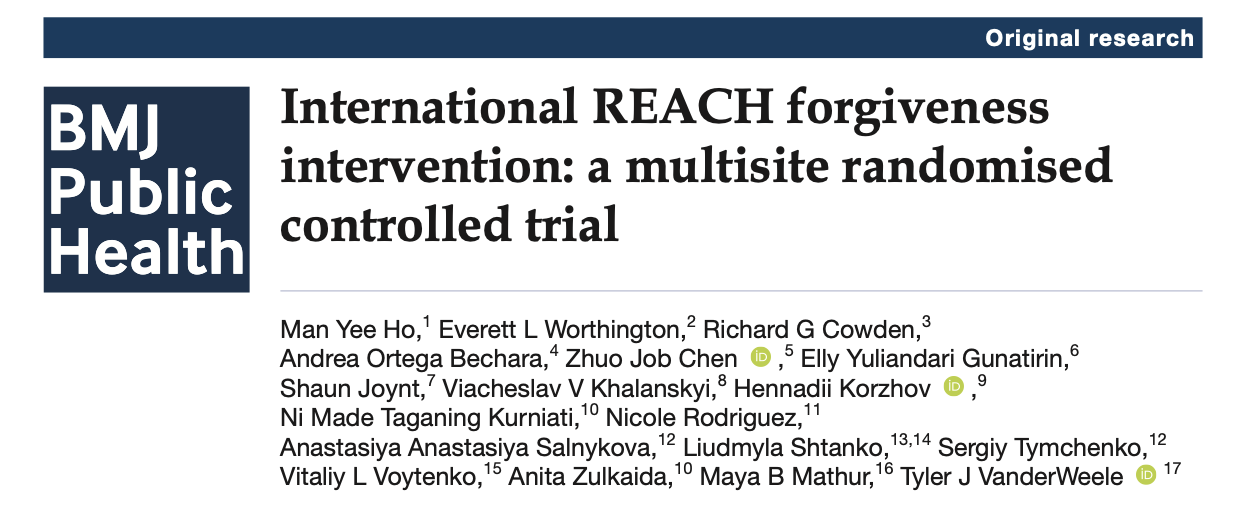
Study Overview: International REACH Forgiveness Intervention
In today’s lecture, we’ll analyze data from a randomized controlled trial (RCT) examining the effects of a forgiveness intervention on reducing unforgiveness and improving well-being. The study by Ho, Worthington, Cowden and colleagues was published in BMJ Public Health in 2024.
Rather than replicating the original study results exactly, we’ll use this dataset to explore two key concepts:
- Incorporating categorical predictors into regression models, and
- Understanding effect modification.
Study Design
This was a multisite randomized waitlist-controlled trial conducted across five countries (Colombia, Hong Kong, Indonesia, South Africa, and Ukraine) with 4,598 participants recruited between February 2020 and October 2021.
Participants
Eligible participants were adults aged 18 and older who had experienced an interpersonal transgression they had not yet forgiven. The sample had a median age of 26 and was 73% female. Most participants had secondary education or higher (87%), were religiously affiliated (76%), and reported above-average household income (62%).
Intervention
The study used a 2-3 hour self-directed workbook based on REACH Forgiveness, a psychoeducational program originally created by Dr. Everett Worthington. REACH is an acronym for the five steps:
- R = Recall the hurt
- E = Empathize with the offender
- A = Give an altruistic gift of forgiveness
- C = Commit to forgiveness experienced
- H = Hold onto forgiveness
Participants were randomly assigned to either receive the workbook immediately (treatment) or after a 2-week delay (waitlist control). We’ll analyze data at baseline (T1 — prior to intervention) and at the 2-week follow-up (T2).